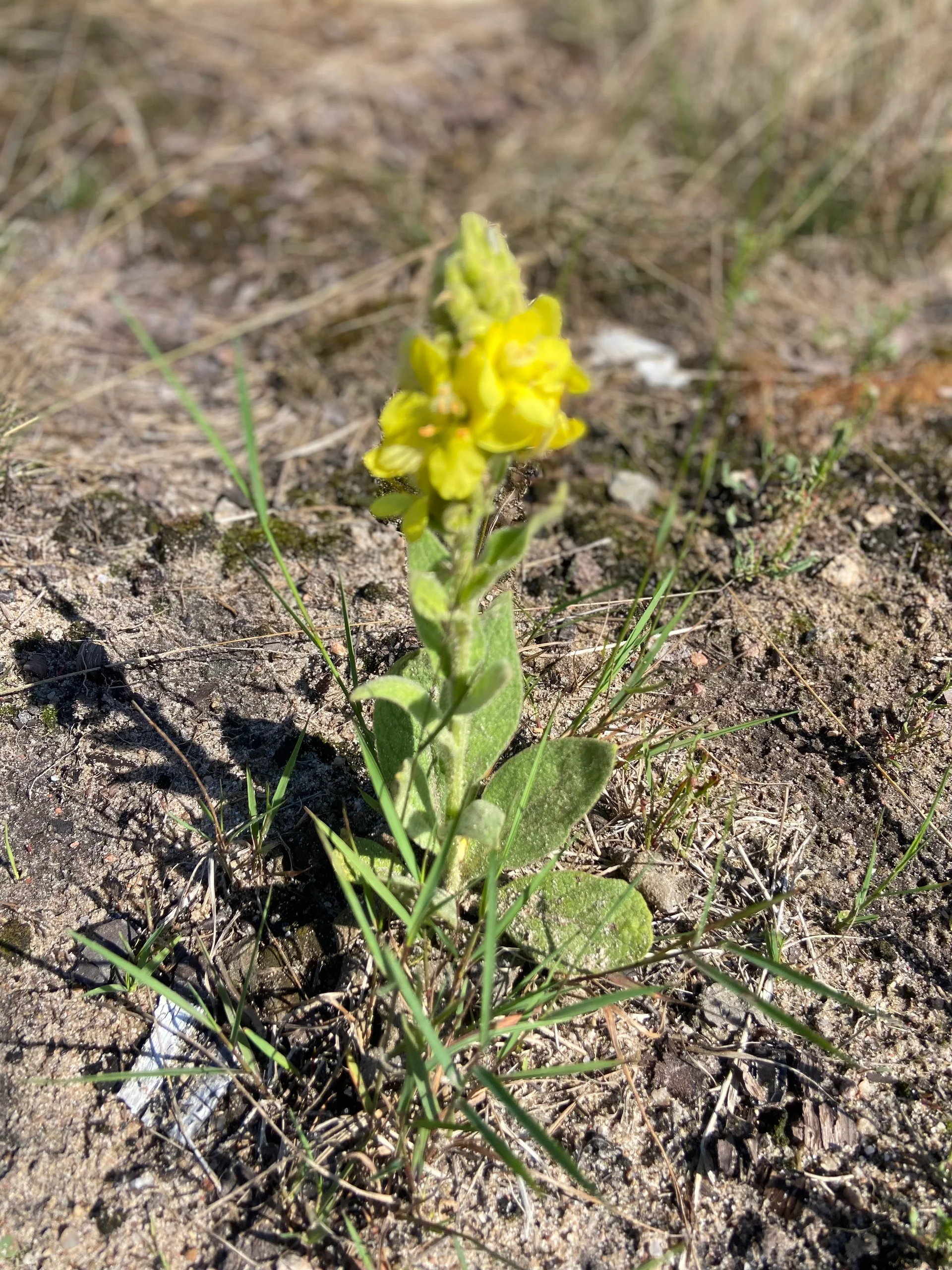
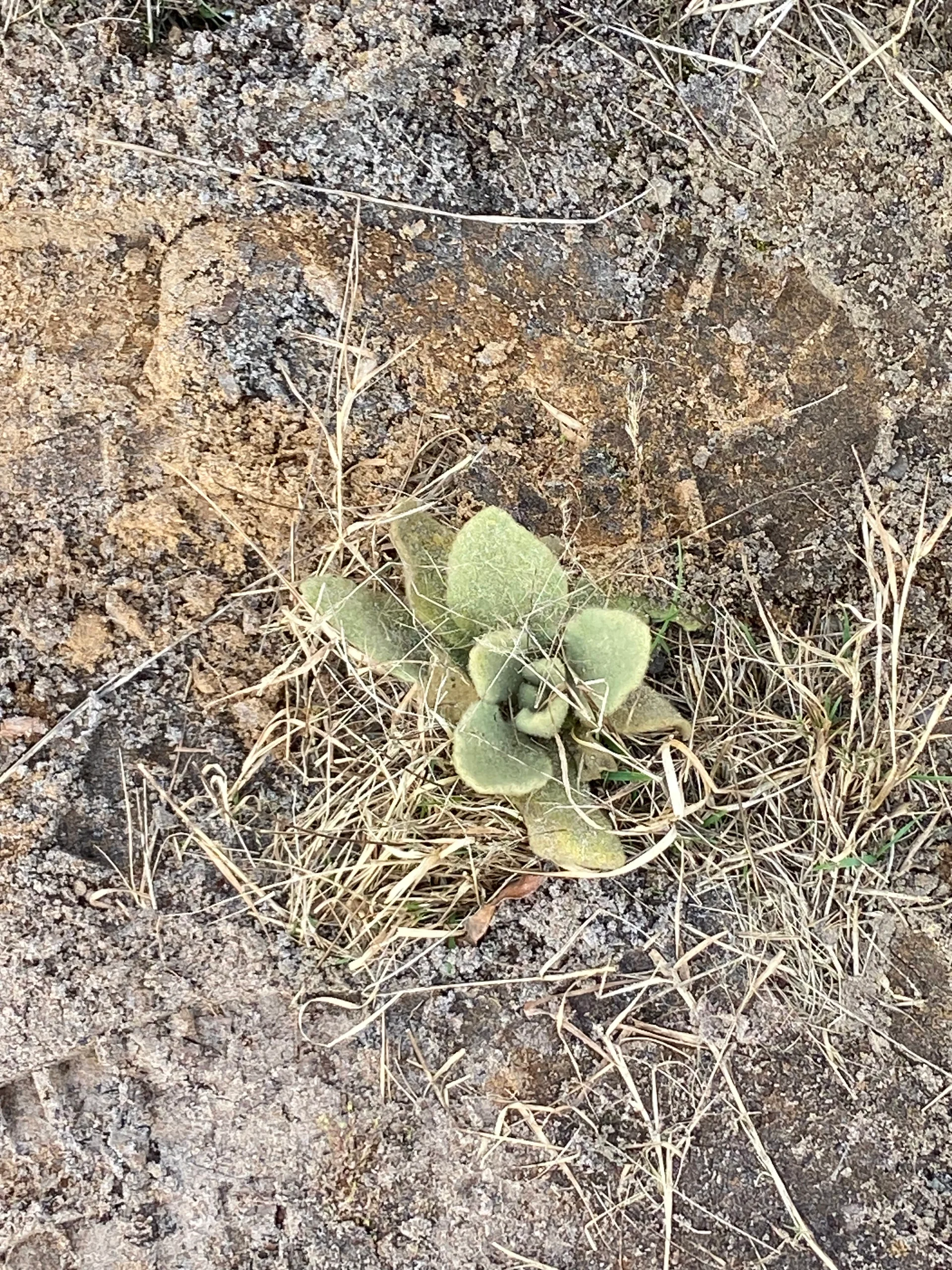
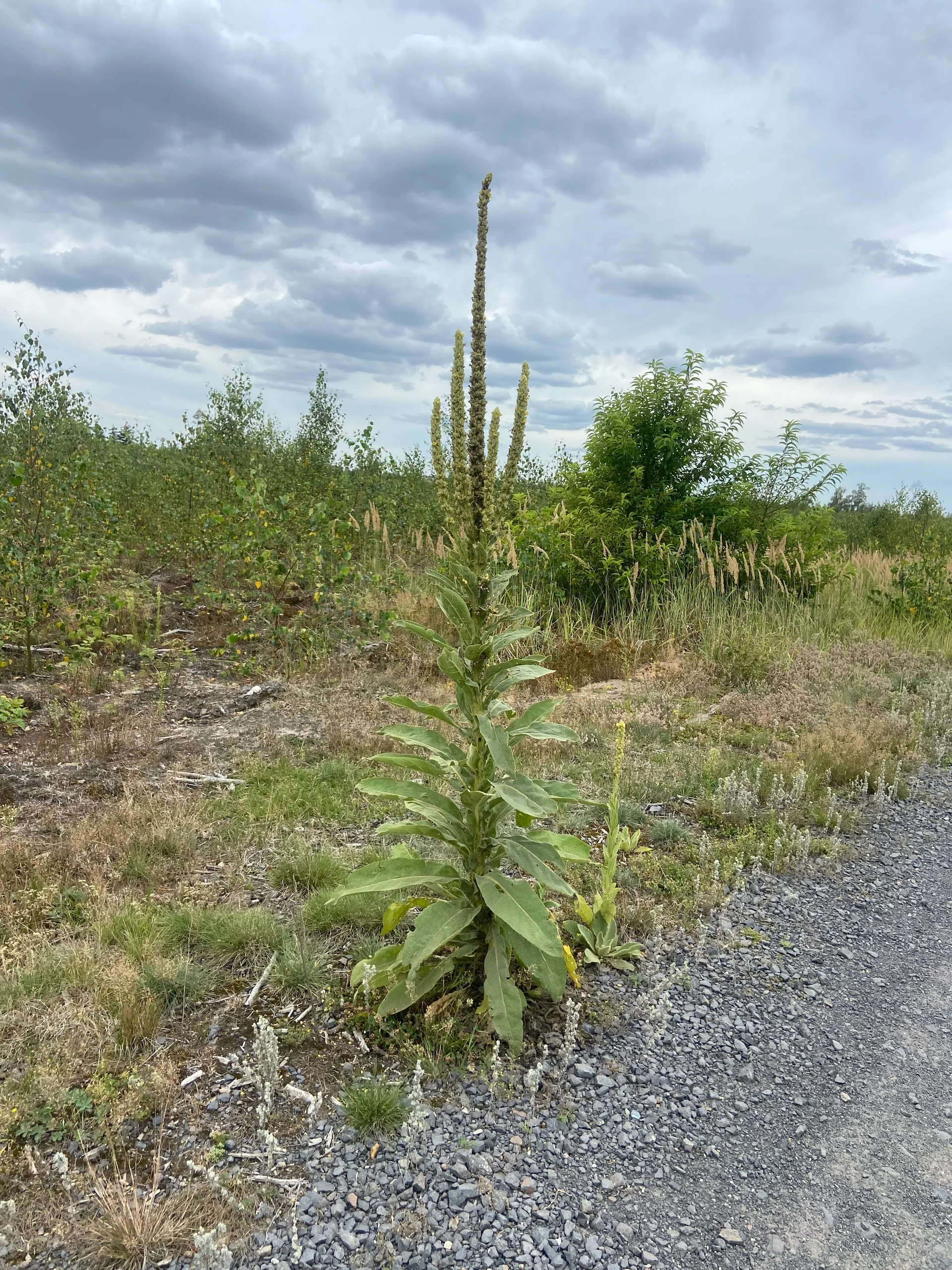
Mullein
Mulleins are a pioneer species whose population revived in the Lack of Forest area after the storm. They also appeared on the Mound, at the site of the eco-memorial, bringing with them many cultural contexts.
***
Devana (the Slavic swamp figure) and mullein (a plant) carry the same name (Dziewanna) in Polish
The figure of Devana appeared with the first Lack of Forest spring, when nature began to regenerate and the spaces of the Lack of Forest shone with emptiness. I fantasised about the presence of people in this space of renewal, pulsing with life and green. I recalled the figure of Marzanna, something very important to me in childhood. I remember the first school drowning of Marzanna, which triggered an emotional response in me. The image of a burning female figure among greenery and bright colours of the sky, in daylight, remained vivid in my memory for a long time. Devana is Marzanna’s twin sister, much less known and rarely depicted, and rather forgotten in the collective imagination as the guardian of spring and renewal. Devana was described by Jan Długosz and Kazimierz Przerwa-Tetmajer. Zofia Stryjeńska made her portrait in the series Slavic Deities.
Other Slavic beliefs depict Devana in a demonic and collective form—no longer as a young woman, but as a nightmare dwelling in forest under-growth, mountain caves, and other hidden natural places. Superstitions concerning motherhood were linked to this version of Devana. The dziwożony were portrayed as hideous, hunched women with long tangled hair, sometimes with a fern-decorated red cap on their heads and with long breasts or pathologically elongated nipples, which they threw over their shoulders. It was believed that the dziwożony kidnapped young girls and young wives. They also abducted infants from cradles, replacing them with their own: an ugly changeling. One could free oneself from the dziwożony using St. John’s wort. It is one of the first plants that appeared around the Mound.
Devana came to me as the opposite of the fear I remembered from childhood. From the moment I first looked into the eyes of a drowning figure, I became deeply connected to the idea of greeting spring. I was looking for a figure, a patroness, who would show me the other side of the Lack of the Forest—this vital, dance-like, and engaged side. Though eerily similar to death, Devana heralds the arrival of a new beginning, a time of fertility and growth. Thus, Devana became the figure I referred to during meetings at the Mound. I embodied her many times, piece by piece. First, it was elements of costume—wooden wings—then an eagle feather fan, and finally, a braid made of intertwined ivy. At that time, I didn’t yet know the demonic side of the dziwożona forest spirit. However, even in this sphere, I found a point of similarity—as I spent a lot of time outside home, I was misunderstood by many in the local community, and seen as an odd fish. A childless woman, wandering alone through the ruins of the forest, doing something mysterious and imaginative. My presence was incomprehensible to many, including some of my close ones.