The Lack of Forest
Publisher: Pamoja Press.
Introduction: Agata Konczal.
Editor: Joanna B. Bednarek.
Translation: Weronika Zalewska.
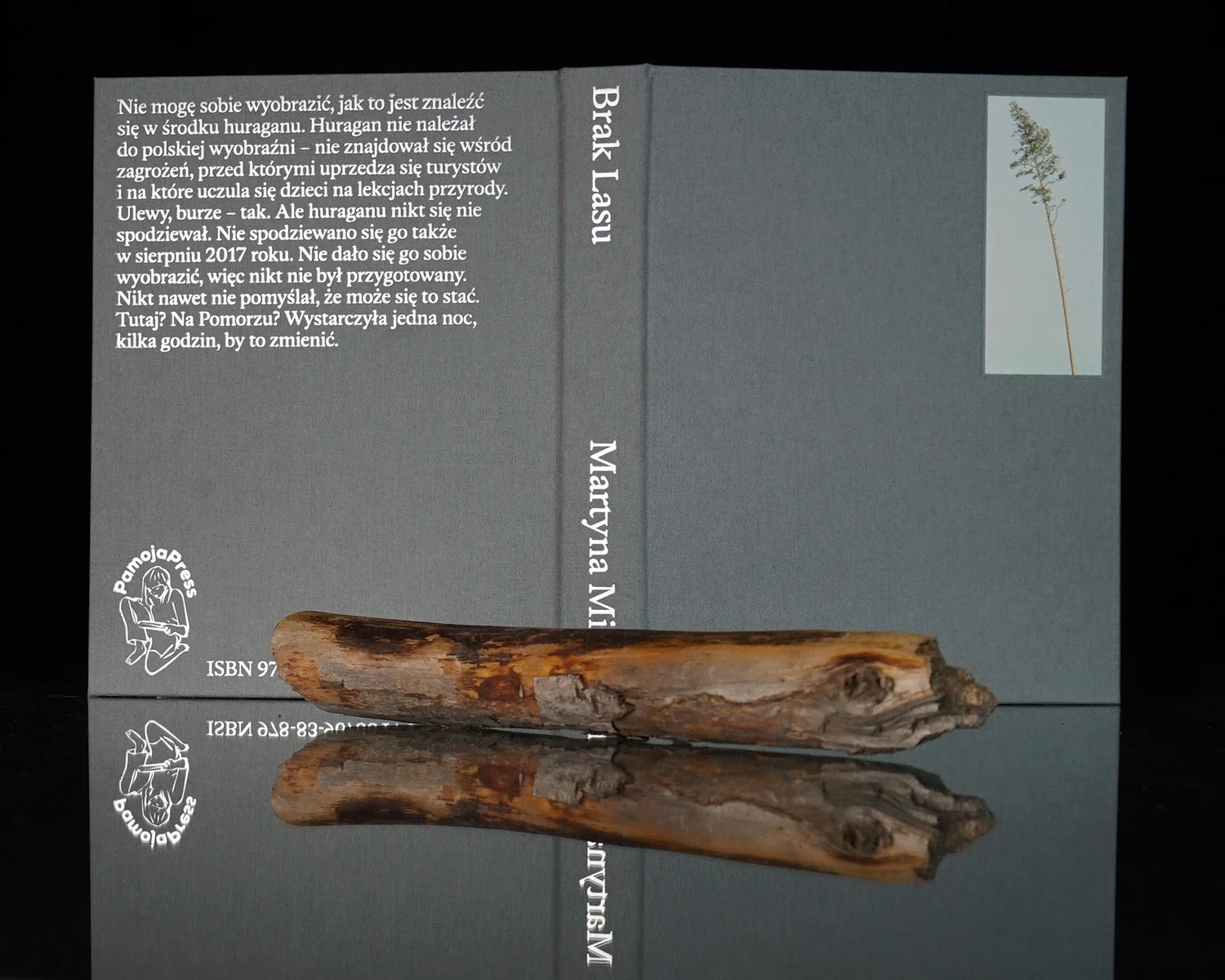
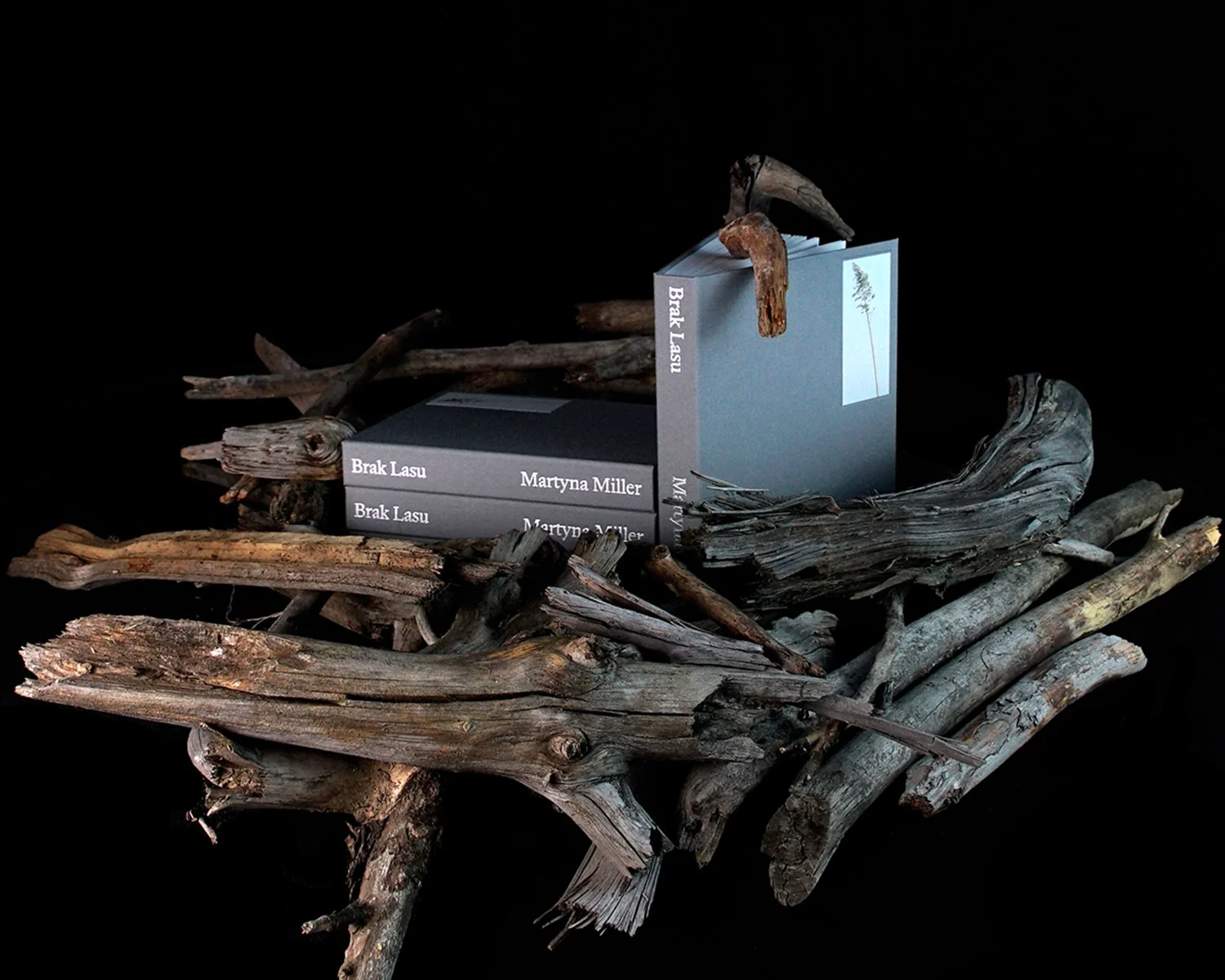
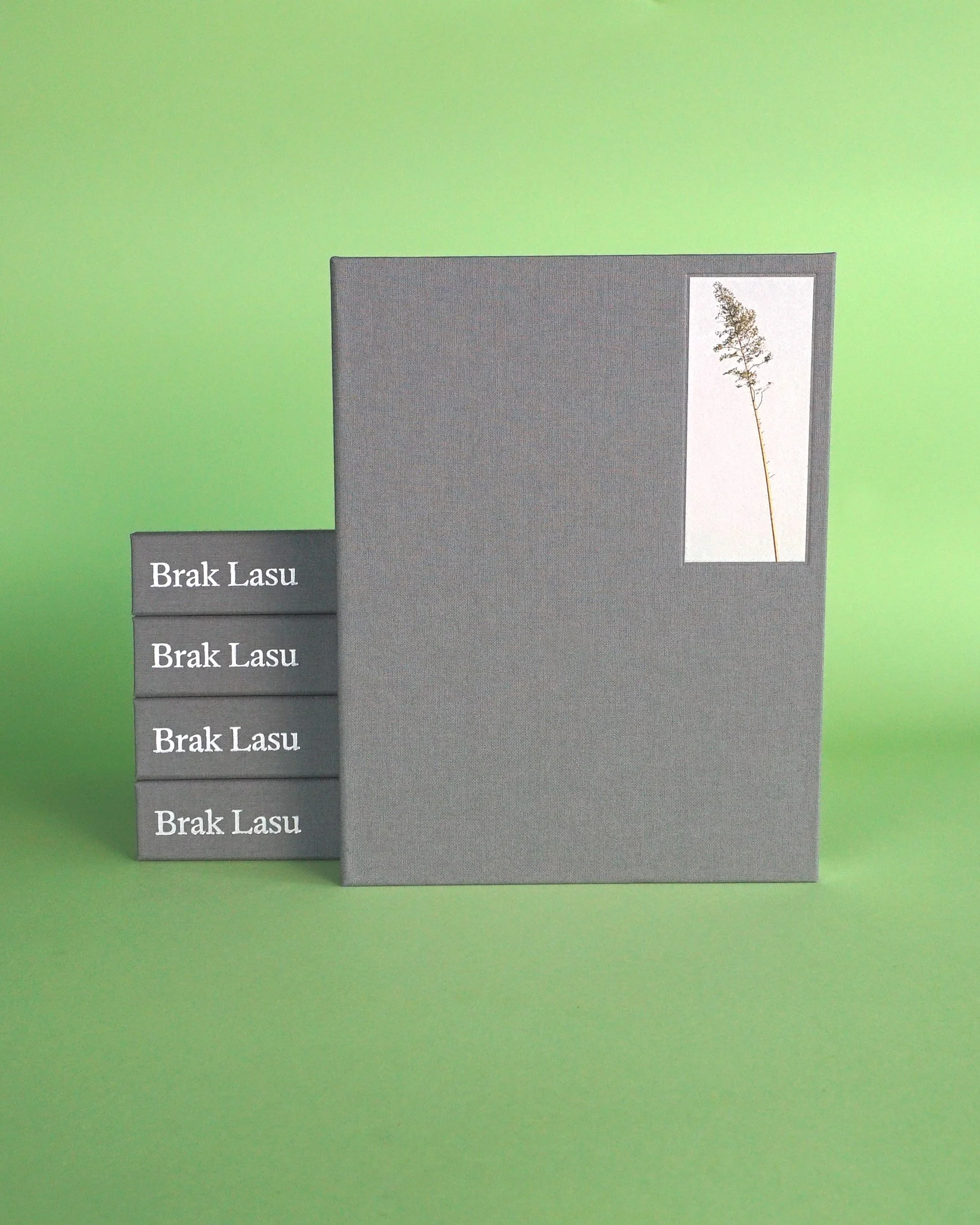
Graphic Design: Zofka Kofta.
300 pages, Hardcover.
The Lack of Forest is the result of a long-term project by Martyna Miller, carried out in the Tuchola Forest region affected by the devastating storm of August 2017. It combines an artist’s book, a reflective essay, and an open archive composed of landscape photographs and testimonies from local residents. Through a personal narrative, the author weaves these elements into a story about ecological grief, the persistence of community, and the processes of biospheric regeneration. Miller also reflects on ways of commemorating what has disappeared. At the center of these considerations is the Mound she created from post-catastrophe material.
Miller arrived in the Tuchola Forest a few months after the storm and remained there for personal reasons. Gradually, she began to learn the histories of the surrounding space, slowly becoming familiar with the post-destruction landscape, understanding the scale of devastation, as well as the consequences the storm had left in the lives of residents. Through numerous conversations, she became a witness to the process experienced by the local community, from the immediate shock after the disaster, through the long work of mourning a lost ecosystem, to cautious attempts at re-establishing relationships with the landscape. Over time, she discovered that the most appropriate way of being present in this place was through attentiveness: listening to the landscape, observing the material traces of destruction, and accompanying it in its slow regeneration.
The artist works with fragments of trees left after the catastrophe, uprooted root systems, and observes the rebirth of biological life. After two years, in collaboration with the Rytel Forest District, she co-created the Mound, built from 120 uprooted trunks and root systems left by the storm. It is not a conventional memorial, but one of many such formations created by foresters while clearing the area after the disaster. Miller managed to preserve one such pile and incorporate it into a field of commemorative practices, transforming it into a site of regular gatherings as well as a space for her workshops. At the same time, the Mound functions as a counter-monument rooted in the materiality of the place — it remains a temporary form, subject to overgrowth and gradual reintegration into biological processes.
Moreover, the Mound raises questions about the subsequent processes of land management: the pace of “cleaning” the area after the disaster and the commodification of the remaining wood. It also opens up inquiries into decisions regarding land restoration and the role of local residents’ voices in these processes.
An important part of the book consists of collected testimonies from residents of the region, recounting both the night of the storm and everything that followed. Miller focuses on how the memory of environmental catastrophe is sustained within the local community. She shows how the disaster is both repressed and returns—in conversations, involuntary gestures, and sometimes through silence. Crucially, this memory is not limited to what can be expressed in language. Miller is equally interested in memory rooted in somatic experience: in the relationship between the body and the devastated landscape, in learning how to move again through a space that has suddenly become unfamiliar, and in sensing places that no longer exist.
The stories collected by the artist often revolve around recurring images, phrases, and motifs, forming a repertoire of ways of speaking about catastrophe. This persistent repetition reveals the workings of memory after trauma, as residents attempt—through fragmented recollections - to make sense of an event that remains difficult to comprehend to this day.
The book is complemented by an introduction by Agata Konczal, which situates The Lack of Forest within the broader fields of environmental humanities, memory studies, and debates on the relationship between humans and landscape. Konczal addresses the problem of environmental loss and memory, drawing on the concept of eco-monuments (mounds, heaps, and piles) to propose a form of commemoration composed of the material of a given place, and thus subject to decay and gradual transformation into a biological habitat. Such a site of memory is meant to activate reflection on ecological interdependence and life after environmental grief.
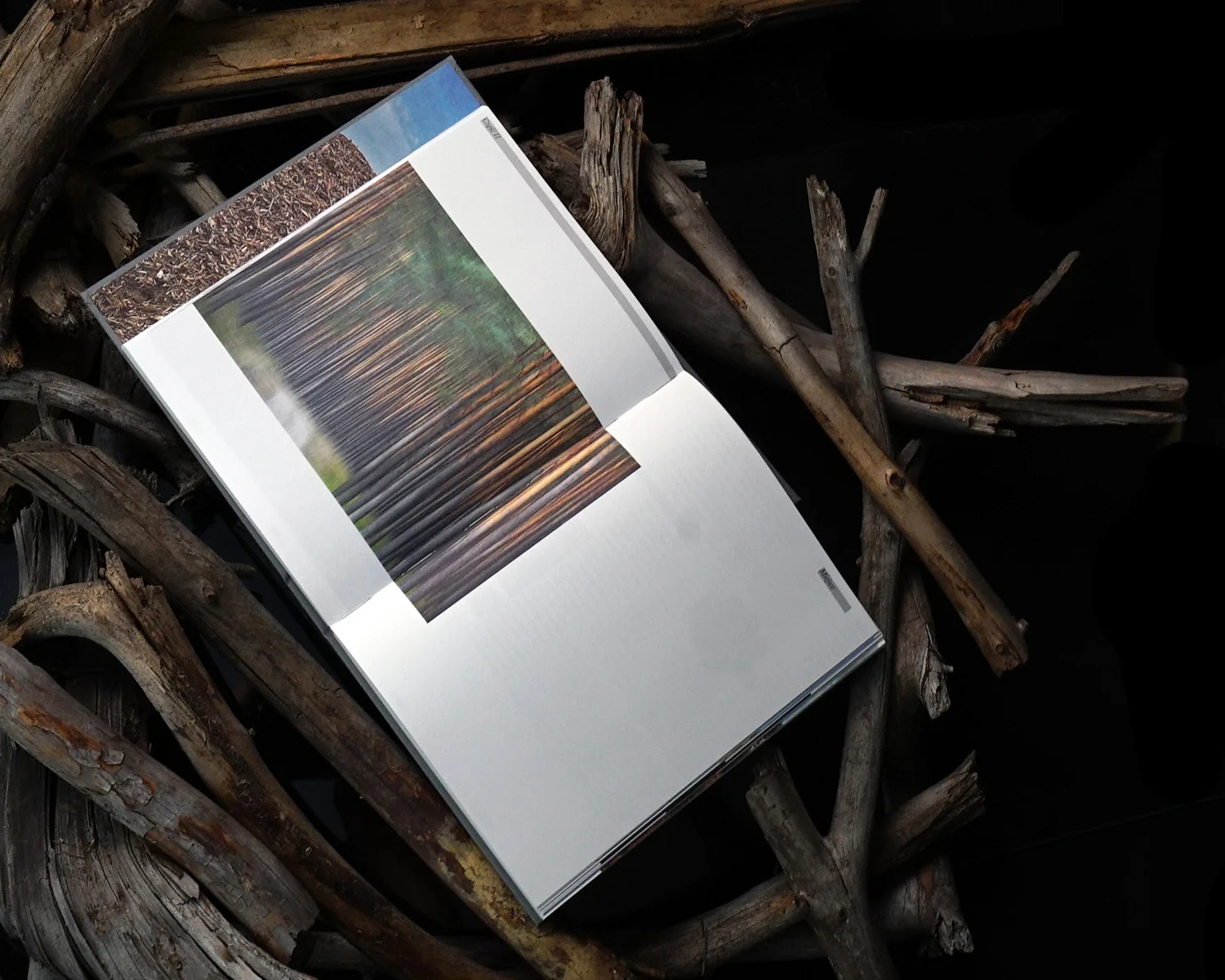
An important element of the publication is its graphic design by Zofka Kofta, which attempts to convey the titular “lack” - the interrupted continuity of the landscape — through the relationship between text and empty space. Combined with the designer’s characteristic elimination of margins and a highly precise placement of photographs, the book takes on the form of a compendium of ways of living daily life in a post-catastrophic landscape.