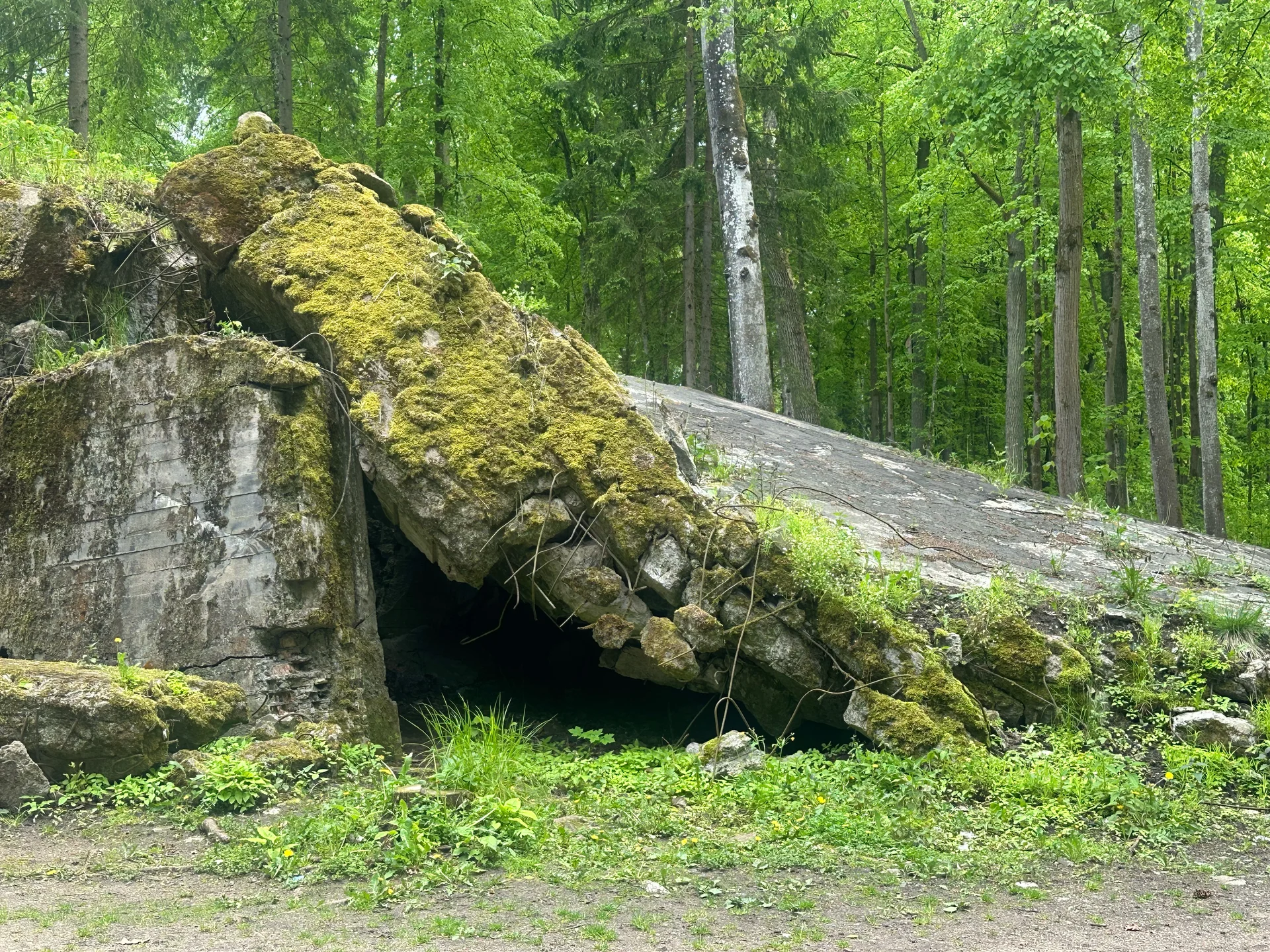
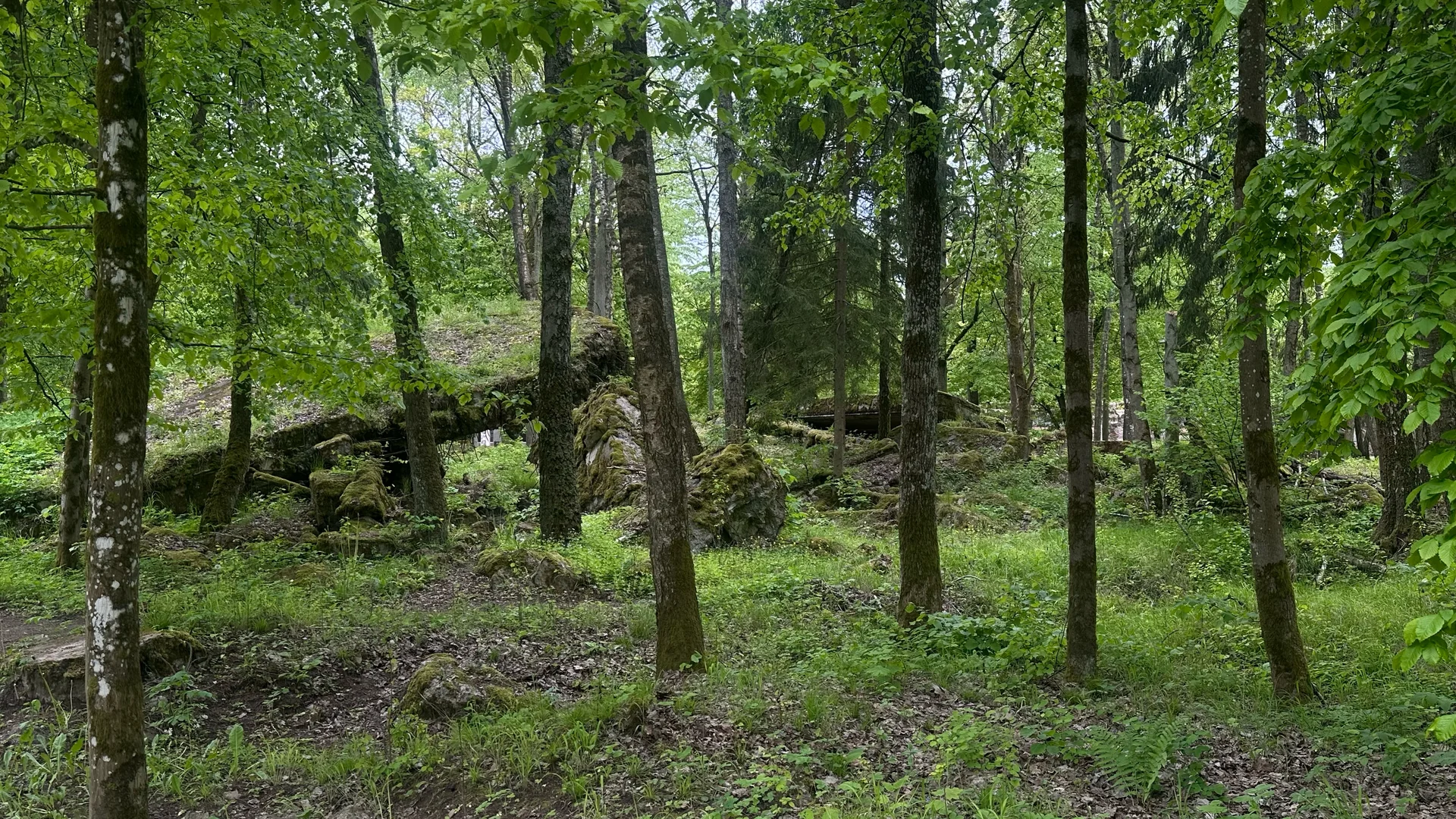
Wolfschanze
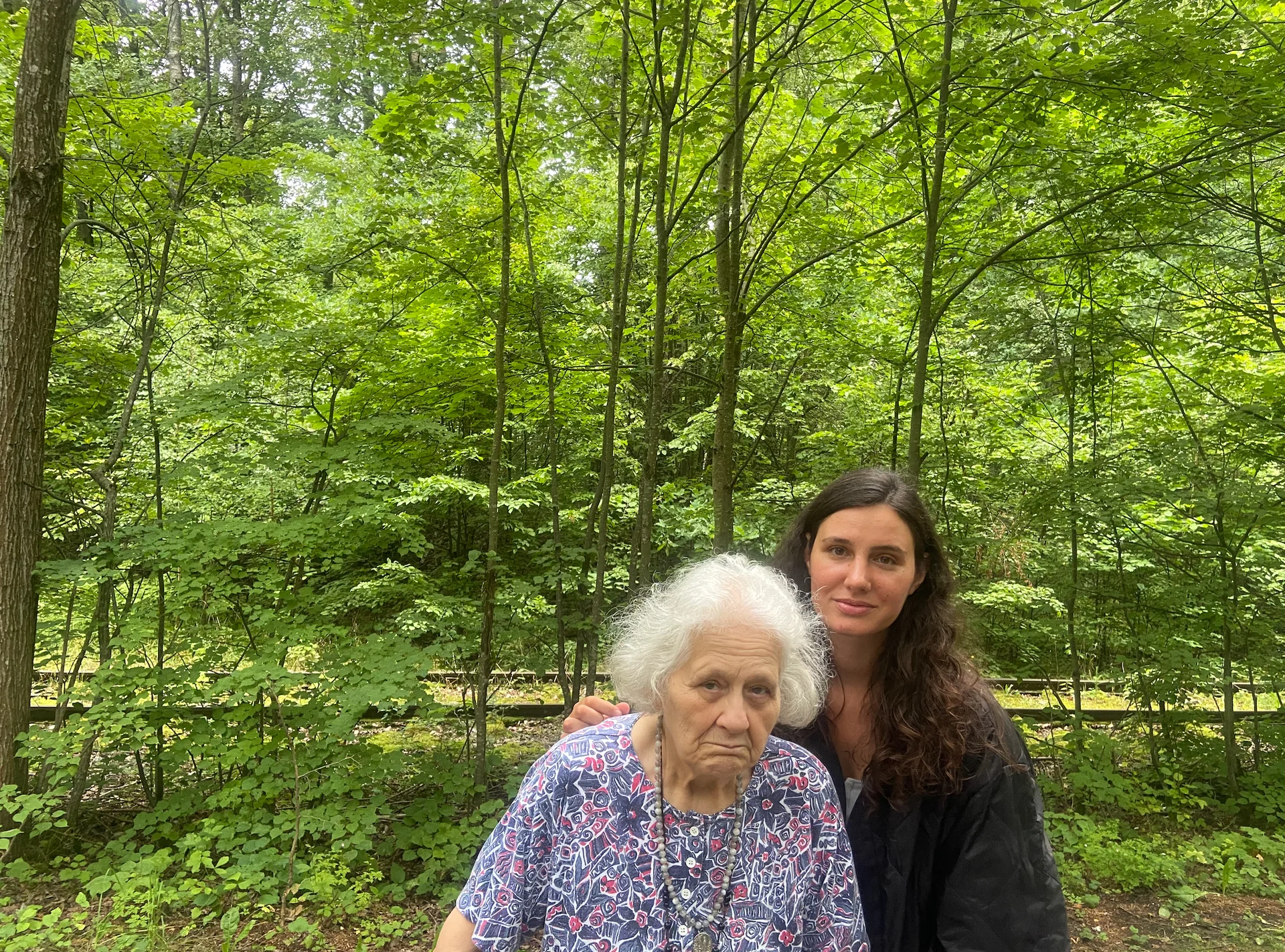
Grandma and The Forest
Until now, my story of the Lack of Forest began on a March morning in 2018: I arrived, and a ruin appeared before my eyes. After years spent outside, whether for personal searching, or participating in research with an international group of specialists, I discovered in myself information confirming a much older origin of my bond with the landscape of the lack. I understood this especially in conver-sation with someone from my research team called In the hurricane. On the land. During a seminar, Tiffany Shaw—an architect and artist from Canada, a Métis woman, whose practice explores elements of Indigenous culture and craft—said she wanted only to speak with her grandmother within a framework of her re-search. She believed her grandmother’s experiences offered a unique possibility of insight into a real, important part of her own issue connected with Indigenous heritage, and also into something essential from the perspective of a world trying to work through the spectre of postcolonial violence. Tiffany admitted that earlier she’d had neither time, nor tools, nor strength to face it. Now, also because of her grandmother’s age, she felt she must act forthwith. This courage in recognising intimate history and the desire to give it attention moved me deeply. Something clenched inside me, and something opened. The story of my grandmother re-turned to me, knocked from the inside of my skin. A story that had haunted me throughout my life, living in me unspoken, yet a reality that unweaves reality. After returning from Montreal, I found the recording of the conversation I had had with my grandmother when I was twenty. That was the one time she decided to speak. Never before and never later did she want to go back to the scenes from the winter forest near Zakopane.
Grandma’s story
My mother was killed when I was not even two weeks old. I was born on the second day of Christmas, and our mother and the family were murdered before January 15th. I know this from my brother and father. Father survived because he was at war. Mother went out with the cows [and left us behind]. You know, if it had been one baby girl, mother would have carried her in a swaddling cloth and breastfed her. But they made little balls of sugar, and my sister fed us with those, wrapped in cloth. It was soaked, and we sucked it. In the meantime, they had to move the cattle through the forest. Everyone had a cow, a goat, something, and they went with it. Because after all, you needed something to feed children with during the war, right?
A whole group of people went there. And they recognised the remains—because the bodies were dismembered. They were walking with the army the whole time. And mother was riding on a wagon, doing everything on the wagon. She gave birth to us on the wagon. And at some point, they had to lead the cattle through the forest due to a terrible air raid. Through the forest, you understand?
Everyone who went with those cows went through the forest. It was not a long stretch of road, due to what father said. But it led through the forest. And they never came out. They were all murdered there. And people would not have known that the corpses belonged to that group who went through the forest. They recognised them… do you know how? My mother’s sister had given birth a week earlier. And she carried that baby wrapped in blankets, with her. And we were two, and we went a bit farther on the wagon. How could she carry two babies and lead the cattle?
Let me finish telling you how it was. They recognised that these were our remains: here were heads, here were arms, lying in piles. They said you couldn’t recognise anyone. And during the day, they went to look for them; at night, no one would go into the forest, oh no. The cattle were gone, nothing left. And they wouldn’t have known that these were the people who went with that cattle if they hadn’t recognised the child. There was a branch, cut. Father says: “That child was impaled on the branch.” And by that, they knew whose remains they were. They killed everyone, everyone. Men, women, everyone. Who went further with the cattle? I don’t know.
Grandma told me this story only once, when I was already twenty. I recount it exactly in the words I heard—without editorial processing or imposed structure. But since childhood, I had dreamt a dream in which a baby carriage stands alone in the forest. In the dream, a shot is heard, although I do not see who dies. My gaze leads me; I want to look into the carriage, but I can see nothing in it except little moving hands, like tiny worms, reaching out for an embrace. I did not touch them; in the dream, I had no body, only sight. I stared at the carriage, turned away, and stared again. In constant rotation, once toward the carriage, once toward the forest, I walked away. The carriage receded, once again left alone. It and me. Alone.
Stories live in our nervous systems; they are triggered by a small or large stimulus, sometimes a word, weather, or wind. The unhealed wounds of our loved ones become our own.